Is The African Fabric Shop a fair trade business?
Because our fabrics and beads come from a variety of sources - most handmade by artisans, but some manufactured - it's difficult to make a blanket fair trade statement, in the sense that it's generally understood.
So, with the issue of fair trade in mind, we'll tell you a bit about how we source our fabrics, beads and baskets and our relationship with the people who produce them.
Our fair trade ethos
We buy most of our fabrics, beads and baskets directly from the makers, who generally work at home in their family compounds. We always pay a fair price that is usually higher than what local buyers pay. Why do we do that?
- A fair price means we get top quality for our customers.
- To our suppliers, our business means a lot. It helps them support their extended families.
- Over the years our producers have become more than mere suppliers. They are our friends.
Hand-dyed batiks from Ghana and The Gambia
We buy most of our batiks directly from the dyers: friends like Esther Amate and Grace Adover in Accra and Neneh Jallow in The Gambia. We always pay a fair price that is more than what local buyers pay. We also spend a lot of time with them documenting and recording their creative processes.
Kudhinda, Langa Lapu and Amafu fabrics
Kudhinda is located in Zimbabwe. Langa Lapu and Amafu are in South Africa. All three were started by locally born white women with an artistic flair and a desire to make a difference. These small, creative enterprises provide much needed training and employment, most often for women. By buying from them, we are supporting these vulnerable communities.
Wax print and Shwe Shwe fabrics
These fabrics are manufactured by large textile companies. Most of our wax prints come from Ghana, though occasionally we have some prints that were produced in the UK for the African market, just as they have been since the industrial revolution. We buy our Shwe Shwe directly from Da Gama Textiles in South Africa. This company is 40% owned by the workers.
Large textiles and cloths
We buy these more collectable textiles from makers and traders on our travels in West Africa. We always pay a fair price that is more than what local buyers pay.
Handmade beads from Ghana, Kenya and Uganda
We buy most of our Ghanaian beads directly from the makers and top up our buying in the bead market in Koforidua. We buy our bone and recycled paper beads through quilting friend who lives in Nairobi. We always pay a fair price to the makers.
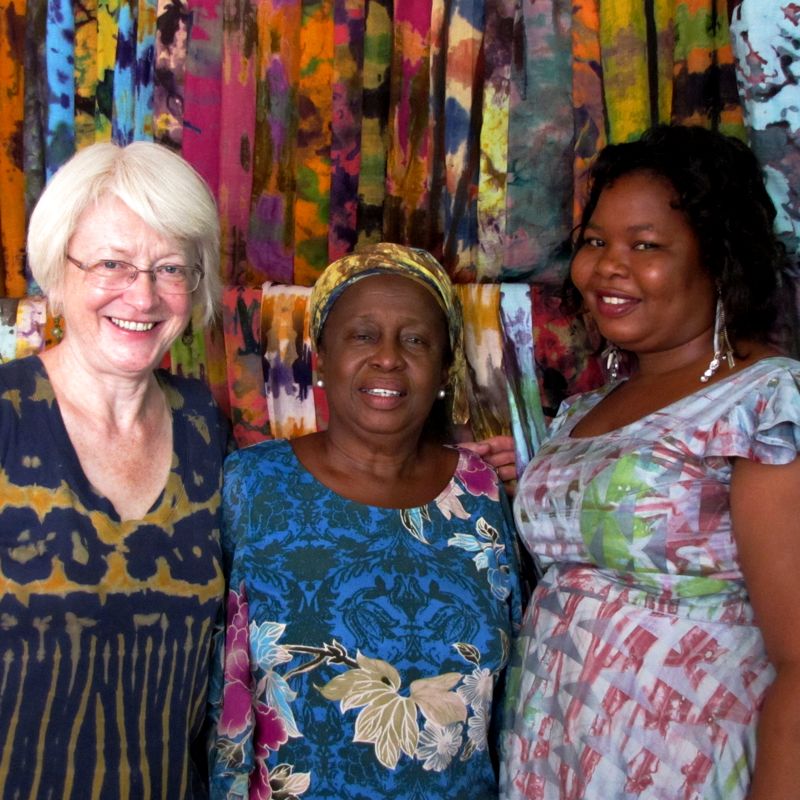 Magie Relph with batik artist Grace Adover and Yaya: Accra, Ghana
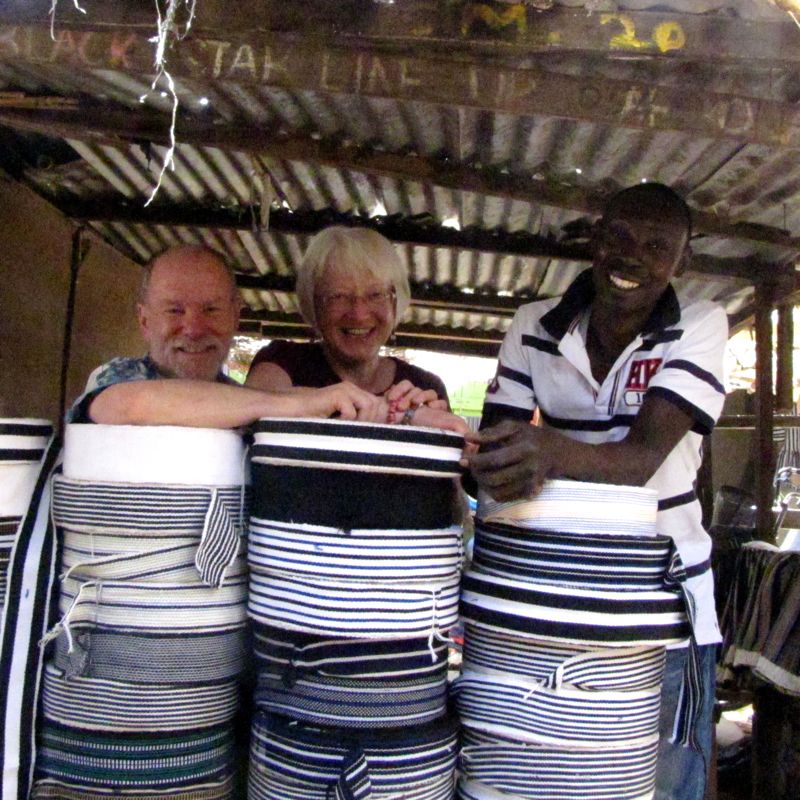 Bob Irwin and Magie Relph with smockmaker Ishmael Mohammed: Bolgatanga, Ghana
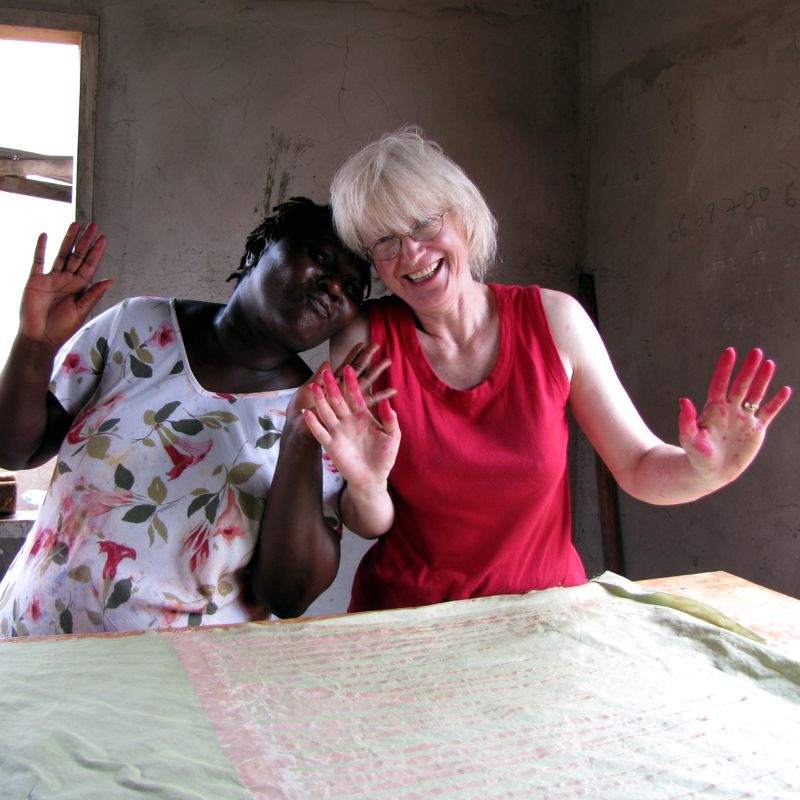 Magie Relph and batik artist Esther Amate: Accra, Ghana